Clarity Is Kindness
- February 3, 2026
- Posted by: Elisabeth quackenbush
- Categories:
Communication in Today’s Aircraft Maintenance Environment
If you ask almost anyone working in business aviation what our biggest operational challenge is right now and what it will continue to be in the near future, you’ll hear one consistent answer: Communication.
Communication has become one of the most prolific challenges of our time. As the industry evolves, the pace of change has outgrown many of the informal habits, assumptions, and cultural norms that once made communication feel effortless in our hangars and maintenance shops. Or, as the saying goes:
“What has brought us to now is not going to take us into the future.”
There was a time when communication in aircraft maintenance didn’t require much intention. The workforce was more uniform in experience and background. Everyone “spoke the same language.” If you asked an aircraft technician what their perfect day looked like, they would smile and say:
“A day where I don’t have to talk to anybody, I just get to work on the airplane.”
This may be stating the obvious, but…Those days are mostly gone.
The Landscape Has Changed, Dramatically
For decades, the hangar environment thrived because the people working inside it shared a common frame of reference. Senior technicians who had seen aircraft technology evolve from one generation to the next could communicate quickly, effectively, and with minimal explanation. Conversations were short, direct, and deeply understood.
Today’s maintenance teams are more diverse in age, background, schooling, exposure, and experience. Some technicians come with extensive training in advanced avionics and digital diagnostics. Others arrive brand new to the industry, trained quickly to meet workforce demand. We can no longer assume the person standing next to us shares our knowledge base, experience level, or interpretive lens.
The old assumption of “they know what I mean” simply doesn’t hold anymore.
At the same time, the customer profile has changed in equally significant ways. Years ago, customers had fewer choices, less access to information, and a more limited understanding of aircraft operations. Technology moved slowly. Expectations were manageable.
Today? Customers vary from deeply knowledgeable aviation veterans to first-time aircraft owners, still learning the difference between maintenance items and upgrades. They have more data, more pressure, and more expectations, and they want clarity.
The old one-size-fits-all communication approach? It is no longer sufficient.
The New Definition of “A Good Technician”
For many years, being a great aircraft technician meant being technically strong. If you could troubleshoot, diagnose, repair, and return an aircraft to service, you were considered exceptional. Your value was measured by what you could do with your hands.
And while technical mastery remains crucial, it is no longer enough.
A modern aircraft technician must demonstrate strong verbal and written communication, the ability to tailor explanations to the listener, professionalism with customers, solid documentation habits, a willingness to collaborate, the confidence to ask for clarity, and the patience to slow down to ensure understanding.
Communication is no longer just a “soft skill.” It is a performance skill. A customer skill. A safety skill. A leadership skill. And it directly influences the quality of work, the customer experience, and the culture of the operation.
Why Communication Matters More Than Ever Before
When communication fails, the consequences ripple far beyond simple misunderstandings. Poor communication can lead to rework, schedule delays, wasted labor, friction between shifts, customer frustration, missed expectations, unnecessary AOG situations, and, most importantly, increased safety risk.
On the other hand, effective communication strengthens the entire operation. It creates trust. It reduces confusion. It enhances collaboration. It improves customer confidence. It provides smoother shift transitions. And it promotes a culture where technicians feel empowered rather than intimidated.
This is why we say:
“Clarity is kindness.” It is to your teammates, your customers, your passengers, your partners, and everyone you interact with.
Practical Approaches to Strengthen Communication
The good news is this challenge isn’t insurmountable. It just requires a shift in mindset and a willingness to develop communication as intentionally as we develop any technical skill.
Below are practical strategies that individuals and teams can start using today.
1. Speak for Understanding, Not for Efficiency
In the past, efficiency meant saying as little as possible. Today, efficiency comes from making sure people fully understand the message, even if it takes an extra minute.
Try this:
- To ensure alignment, ask the listener to restate what they understood.
- Avoid jargon unless you’re sure they understand it.
- Follow up verbal instructions with written notes or work cards.
2. Use a Standard Communication Framework
Aircraft maintenance environments thrive on structure. Apply that same discipline to communication by using a simple framework:
S.B.A.R.
- Situation – What’s happening
- Background – What got us here
- Assessment – What you think the issue is
- Recommendation – What should happen next
This keeps conversations focused and aligned, especially across shifts.
3. Adapt Your Style to Your Audience
A high-time Lead Tech, a junior AMT fresh out of school, a DOM, and a first-time aircraft owner all require very different communication approaches.
Ask yourself:
- What is their level of knowledge?
- What do they care most about?
- What information is essential for them?
- Where might misunderstandings occur?
Communication is not just delivering information; it is meeting someone where they are.
4. Practice “Customer Translation”
Technicians are experts. Customers are not.
There is a fine line between educating and overwhelming.
Instead of:
“The FCU is showing inconsistent metering because the PT2 signal might be fluctuating.”
Try:
“One of the components that controls fuel flow isn’t sending consistent data. We’re going to run a test to pinpoint the cause.”
Simple. Respectful. Clear.
5. Document Like Someone’s Life Depends on It, Because It Does
Documentation is communication.
Incomplete notes are one of the biggest sources of rework and misunderstanding.
Set a team standard for consistent terminology, clear documentation of steps taken, stated reasons for deferrals, photos when applicable, and thorough shift-turnover summaries.
Imagine someone reading your notes at 3 am during AOG — would they know what to do?
6. Create Psychological Safety Within the Team
Technicians must feel safe asking questions, admitting uncertainty, or raising concerns. Silence is not a sign of competence — it is a sign of fear.
Leaders can create psychological safety by thanking people for speaking up, responding without judgment, modeling curiosity instead of criticism, and encouraging cross-generational learning.
A silent hangar is not always a productive hangar.
7. Train Communication Just Like Technical Skills
We often assume communication is an innate ability. It is not. It is a skill that must be practiced and developed. That is why many organizations invest in human factors training like the programs offered by ServiceElements, including communication workshops, conflict-resolution training, customer interaction training, generational awareness, and emotional intelligence development, among other topics.
This isn’t just a “nice to have.” It strengthens the safety, communication, and overall quality of the operation.
8. Make Clarity a Cultural Standard
A leader’s role is to provide clarity and to celebrate those who demonstrate it, defining what clarity looks like and reinforcing it through feedback and personal recognition.
Celebrate technicians who explain things clearly, support newer techs, de-escalate frustrating customer situations, communicate thoroughly during turnovers, and demonstrate patience and kindness.
These behaviors improve safety, efficiency, and customer experience.
Communication Is Our New Aircraft System
We spend so much time focusing on the aircraft systems — engines, avionics, hydraulics, electrical, fuel — that we often forget the system that influences every single other one:
Communication.
When communication works well, the whole operation works better.
When it fails, everything becomes harder.
The industry has changed.
The workforce has changed.
The customer has changed.
And those days, when technicians didn’t need to talk much, are mostly gone.
But the future is bright if we treat communication like the critical system it is, by setting expectations, modeling clear behaviors, and building communication skills just as intentionally as technical skills. This is exactly what ServiceElements’ and its customers champion within the industry.
In the end, clarity isn’t just kindness. It is how we advance our industry to meet this moment and continuously grow.
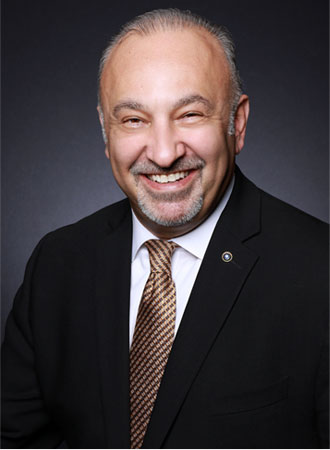
Bob Hobbi is the Founder and CEO of ServiceElements, and has over 37 years’ experience in the aerospace and business and general aviation industry. Bob held various executive positions at FlightSafety International, until he was recruited by Honeywell to be Director of the Aerospace Academy, responsible for training thousands of aviation professionals from all sectors of the industry. Bob later joined MedAire in the role of Vice President and General Manager for all business aviation activities. He has held executive positions on several boards including the Arizona Business Aviation Association, the NBAA Business Aviation Management Committee, and 9 years on the Scottsdale Airport Commission. Additionally, Bob is the co-author of Building a Service Culture (Information Age Publishing, 2008), has published numerous articles on workforce development, and is a frequent keynote speaker at business aviation industry events. In 2003, out of sheer passion for the industry, Bob launched ServiceElements International Inc. to develop people and solve challenges in the business and general aviation industry. ServiceElements has grown into an industry icon addressing topics such as Service Culture, Leadership, Teamwork, Communications, Human Factors and Organizational Development.